
7 Critical Points in Cosmetics Product Photography: Lighting, Surface, and E-Commerce Visual Standards
Cosmetic product photography is effective when the packaging’s gloss, the accuracy of the product’s color, the clarity of the texture, and the technical requirements of the sales channel are all taken into account simultaneously. This guide outlines seven key considerations derived from the cosmetic projects we’ve shot at our Istanbul studio since 2005, complete with set diagrams and measurements.
The images on this page were photographed on a physical set using the actual product. We build the set using real materials and adjust the lighting to match the product’s packaging surface; we do not generate product images using artificial intelligence. In cosmetics shopping, ensuring that the product the customer receives in the box matches the one they see on screen is the most valuable detail on the page.
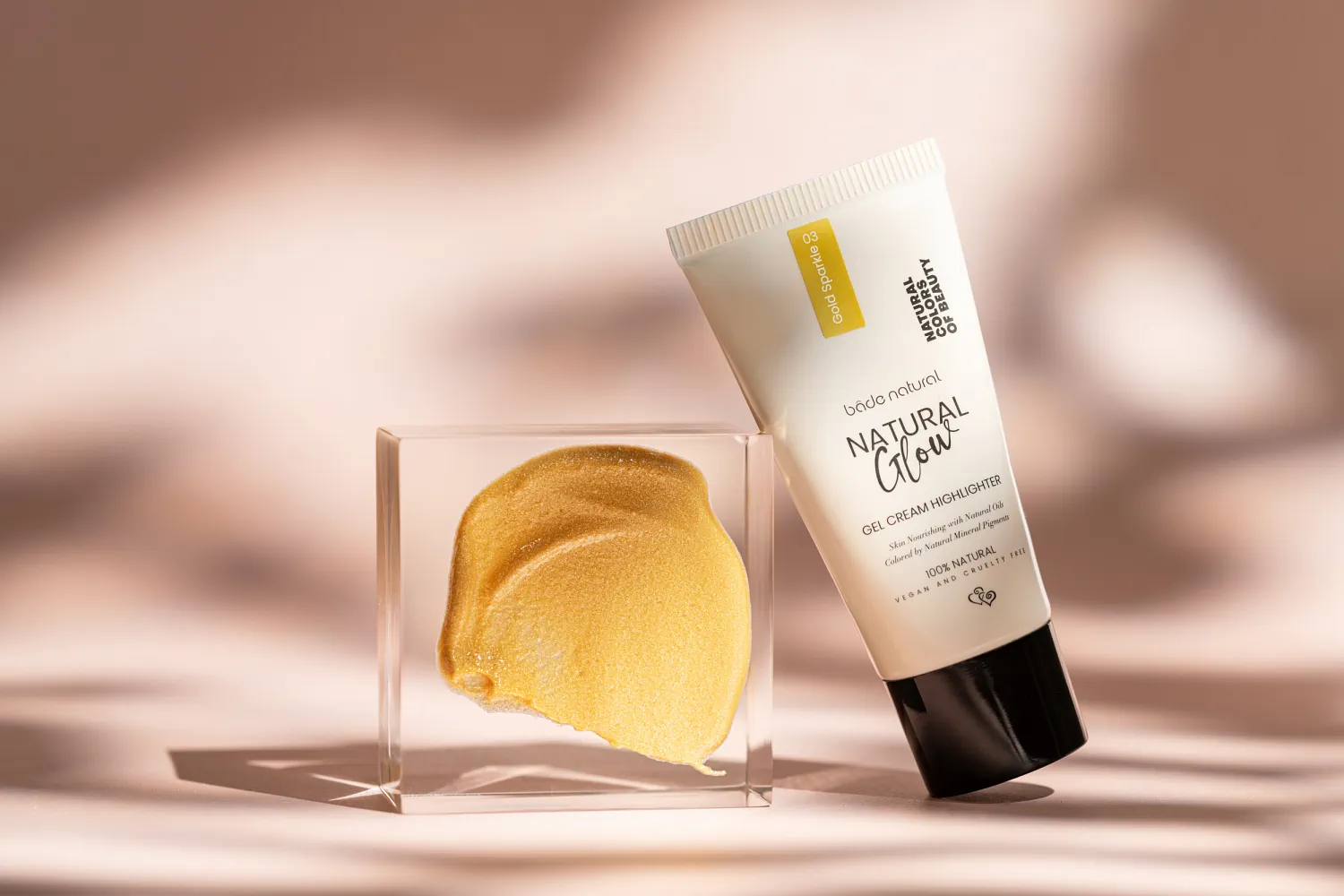
What should you keep in mind when photographing cosmetic products?
In cosmetic product photography, seven key elements are set up together: cleaning, surface, lighting, color, sharpness, visual set, and retouching. At the LUX Production Istanbul studio, white-background shots, decorated still lifes, model-based shoots, and short videos can be scheduled on the same production day across three separate production lines; the number of products and the complexity of the surfaces determine the shoot schedule.
- Cleaning Dust, fingerprints, scratches, and packaging marks should be checked before the shoot.
- Surface Glass, metal lids, glossy plastic, and transparent packaging require separate light control.
- Light Large diffusers, controlled gradient lighting, and reflective cards make the product’s shape clearly visible.
- Color The shades of lipstick, foundation, eyeshadow, cream, and perfume are kept as close as possible to the actual product.
- Clarity Focus stacking may be necessary for small subjects due to macro close-ups.
- Image set Main visuals, detail shots, lifestyle shots, model shots, and advertising creatives do not serve the same purpose.
- Retouch Retouching ensures cleanliness and standardization; it should not alter the product's authenticity.
- Brief E-commerce, promotional campaigns, social media, and video content should be planned separately before filming.
Transition from the guide to the shoot brief
This guide makes the decision easier. During the shoot, the number of products, the number of variants, the packaging surface, the sales channel, model requirements, set design, and requests for short videos are all evaluated together.
We prepare quotes based on the scope of the project, the number of products, the type of shoot, model/set requirements, and post-production details. We also prepare quotes for single-product marketplace main visuals.
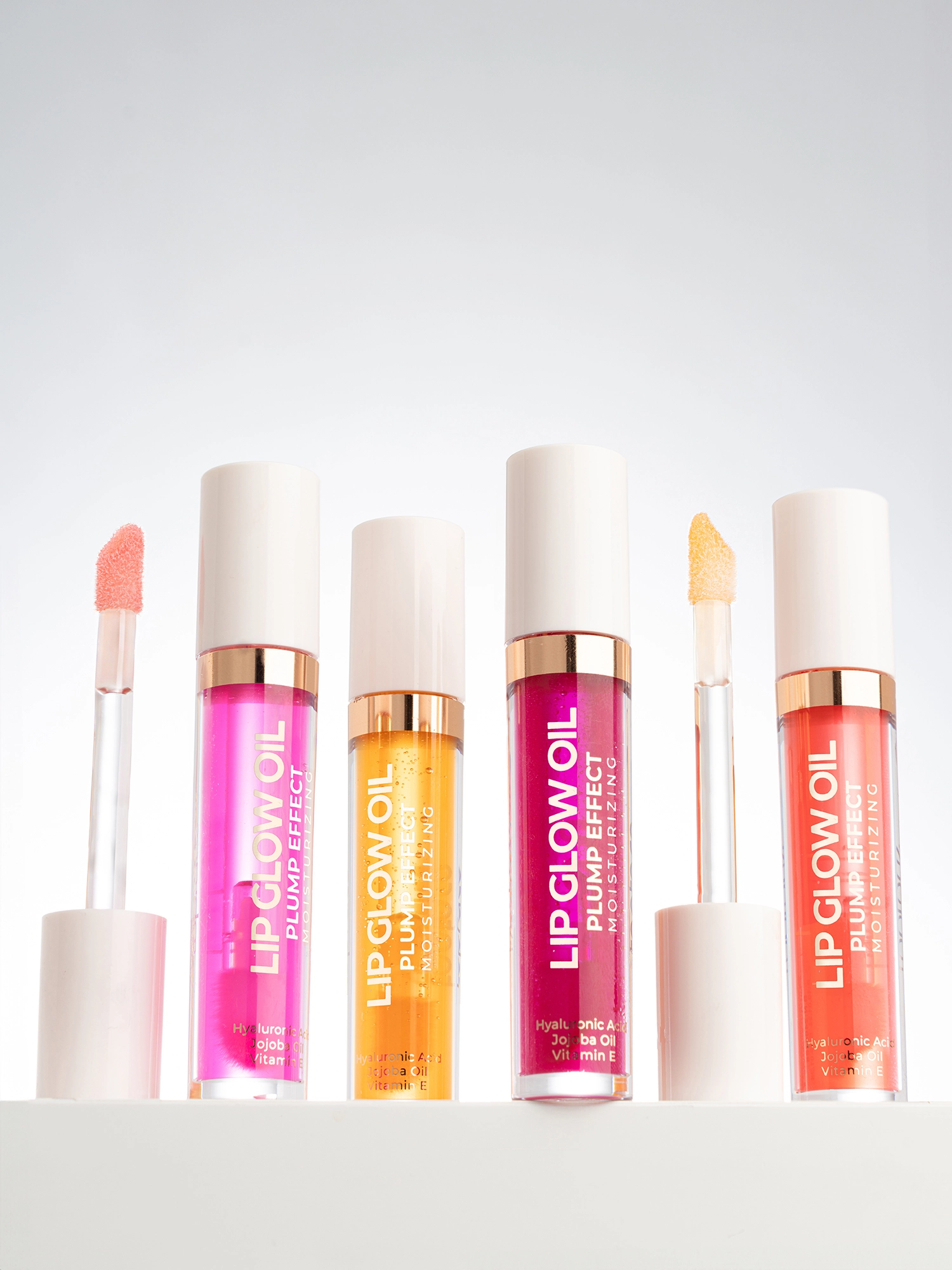
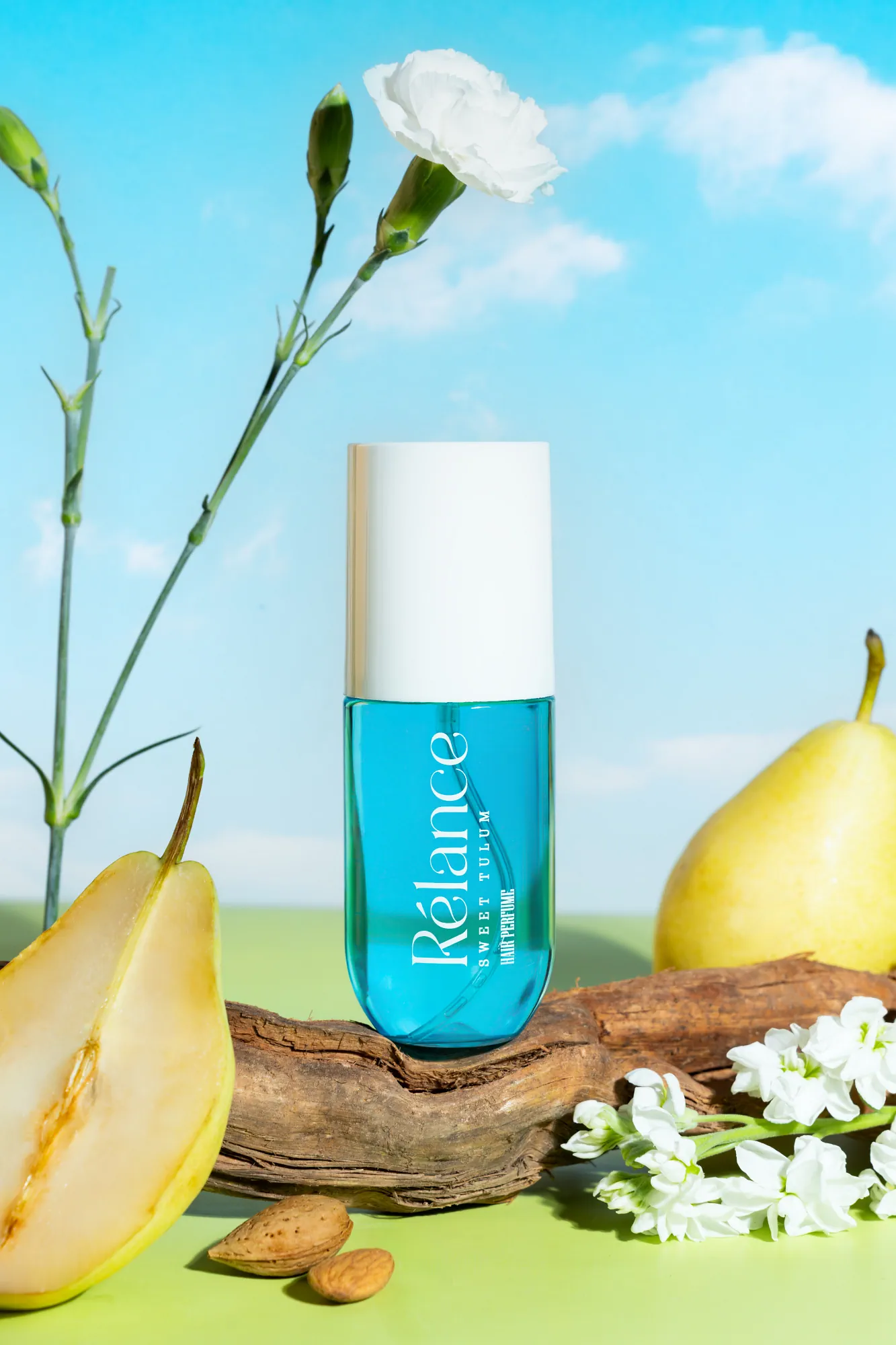
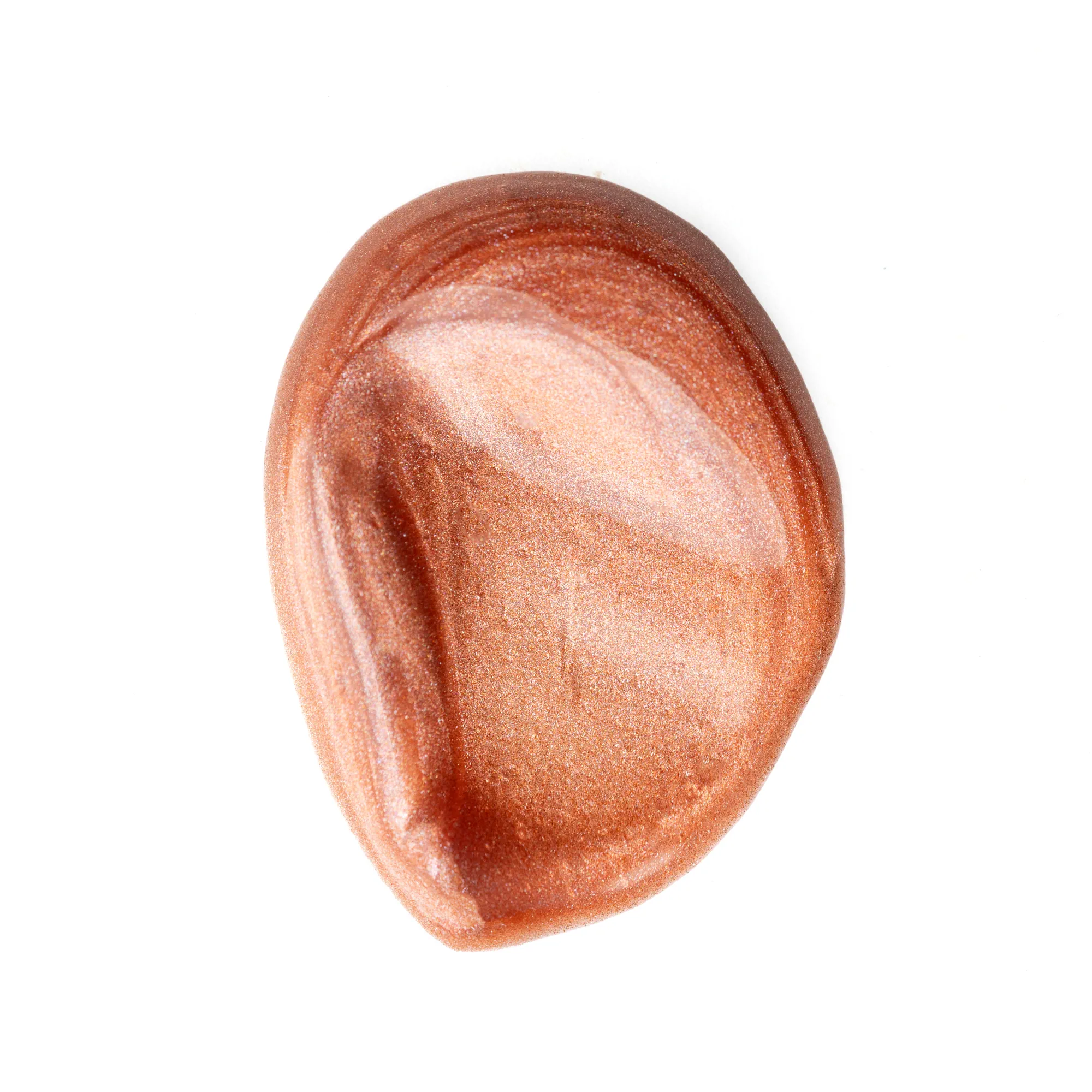
Where is the light installed in the glossy packaging?
It does not show the light on a shiny surface, but rather the light source itself. The white stripe you see on the glass bottle is the reflection of the diffuser on the surface; therefore, the length of the reflection is determined by the size of the light source and its distance from the product. The light source is magnified, a black card is used to define the edge line, and a white card is used to measure the angle on the opposite side.
Top view. Not to scale; layout varies depending on product length and packaging surface.
- 1Large diffuser. A wide seam along the length of the packaging leaves a continuous reflective strip running the length of the bottle. As the seam narrows, the strip becomes shorter and the shape flattens out.
- 2Black card. It draws a dark line along the edge of the glass and metal. This line separates the product's silhouette from the background.
- 3White card. It opens the shadow on the opposite side just enough so that the label remains legible. Anything more than that cuts into the edge line.
- 4Reflective strip. It is a mirror of the source on the surface. When it is moved, its shape changes; when it is completely erased, the product reverts to cardboard.
- 5Camera and optical axis. This axis determines which reflection will be included in the frame; therefore, the lighting is adjusted after the camera angle has been set.
How much depth of field remains in a macro shot?
On a 35 mm full-frame sensor, the depth of field at f/11 and a 1:1 magnification is approximately 1.3 millimeters. It increases to 4 millimeters at 1:2 magnification and to 13 millimeters at 1:4 magnification. When the lipstick tip, serum pipette, and packaging engraving all need to be in focus within the same frame, this range is insufficient, so focus stacking comes into play.
These are approximate values based on a 35 mm full-frame sensor, an f/11 aperture, and an assumed circle of confusion of 0.03 mm.
- 1Stopping down the aperture isn't a one-size-fits-all solution. In macro mode, the effective aperture increases as the aperture opens: at a 1:1 magnification ratio, it behaves like f/11 or f/22, and the Airy disk expands to approximately 30 microns. Since the pixel pitch on the 61 MP full-frame sensor is 3.76 microns, this spot corresponds to a blurring effect spanning eight pixels in width.
- 2f/16 decision. The depth of field increases to 1.9 millimeters, while the diffraction spot is 43 microns. The depth gained does not compensate for the loss of micro-contrast in most cosmetic packaging; instead, we shoot with graduated sharpness and composite the images.
How many different shots can you get from a cosmetic product?
Six key shots are created from a single product: a main image on a white background, an angle shot, a packaging detail shot, a macro texture shot, a stylized campaign shot, a model usage shot, and a short video. The first three are used for marketplace listings; the other three are added for the brand website, advertising, and product launches.
Main image on a white background
It showcases the product without hesitation. The same framing, scale, and white balance are maintained across all variants.
Marketplace · CatalogAngle and packaging details
Information about the cover, applicator, back label, and volume perception is provided here. These elements are most effective at reducing the return rate.
Product PageMacrostructure
Pigment, shimmer, creamy texture, and engraving. Gradual blending of clarity is often required in this frame.
Details · A+ contentStylized campaign shot
The choice of font, background, props, and color sets the brand’s tone. If the prop overshadows the product, the message gets lost.
Campaign · advertisementModel-based usage
The range, shade, and application method on the skin influence purchasing decisions for lipstick, foundation, hair care, and perfume.
Launch · social mediaShort product video
Texture, fluidity, and the act of opening the package are conveyed through movement. The 9:16 and 16:9 versions are taken from the same set.
Reels · AdsThree production lines operate simultaneously on the same production day
If the number of products and set preparation allow, white-background, decorated still-life, and video sets are shot in parallel on the same day. Since all three lines share the same color, surface, and decor choices, there is no break in the visual language between photography and video. Continuous lighting, motorized sliders, and rotating platform movements are factored in from the start. Meryem Aydın oversees set design and product presentation; Burak Bulut Yıldırım makes decisions regarding lighting, optics, and framing.
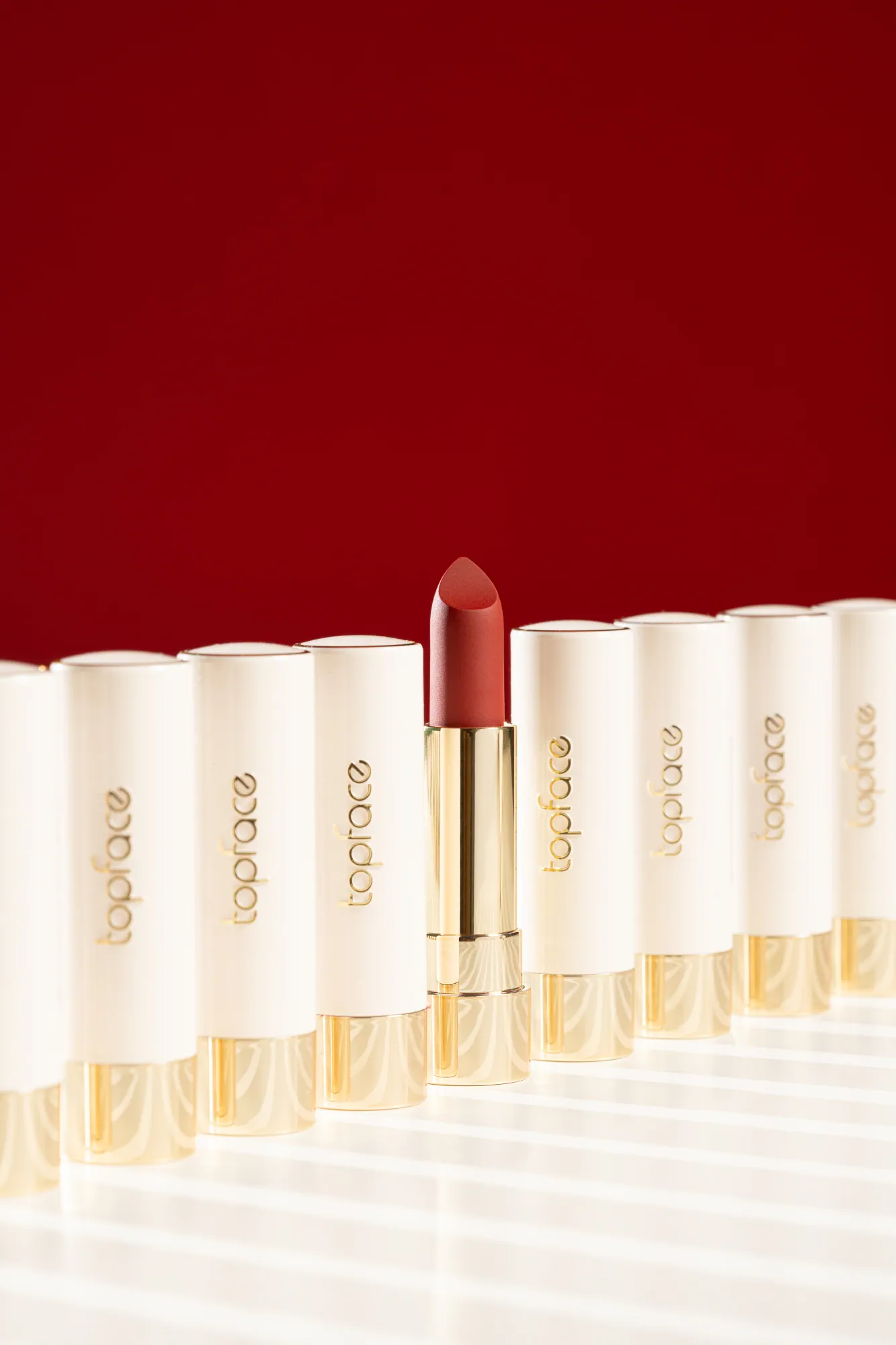
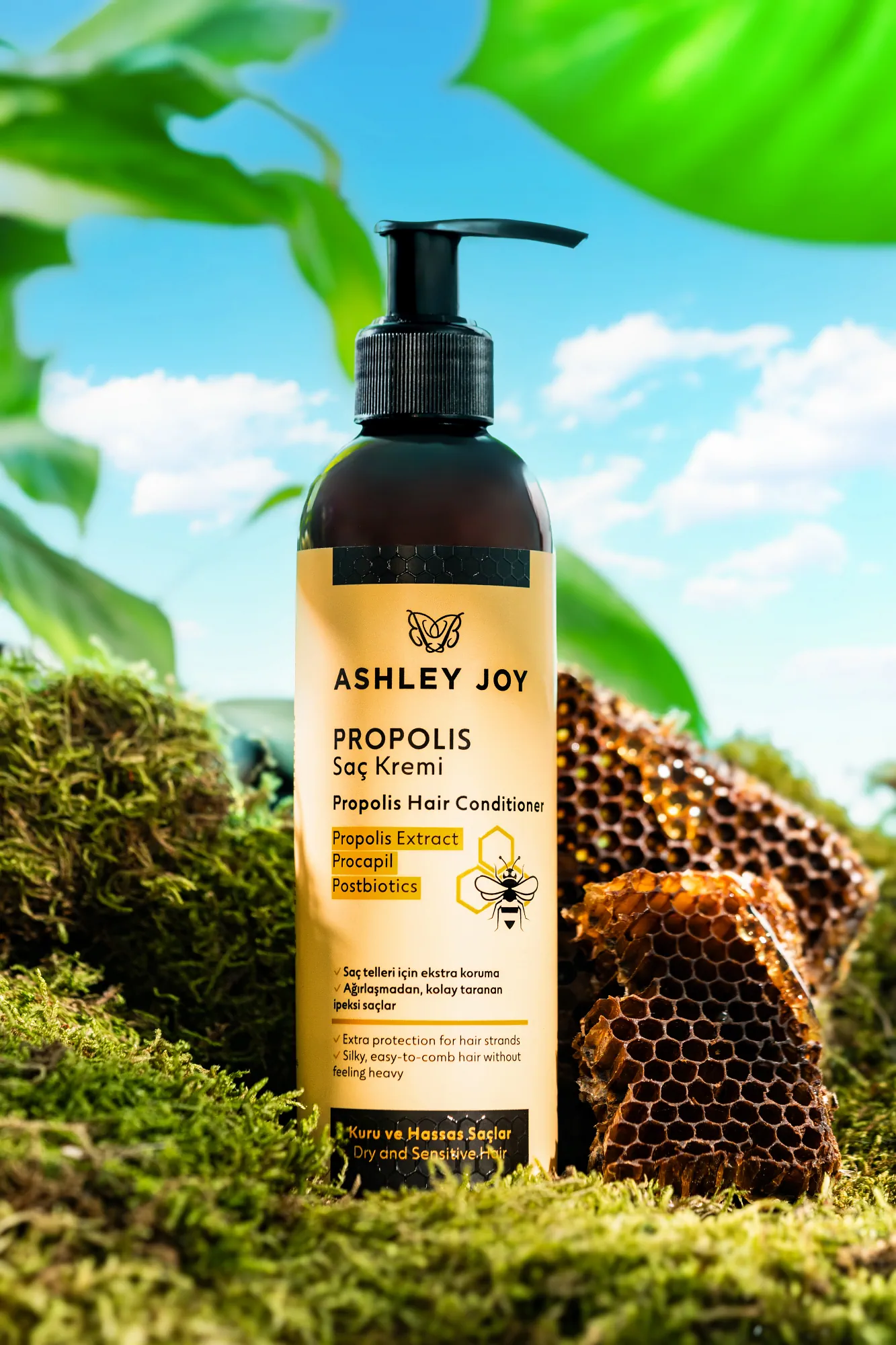

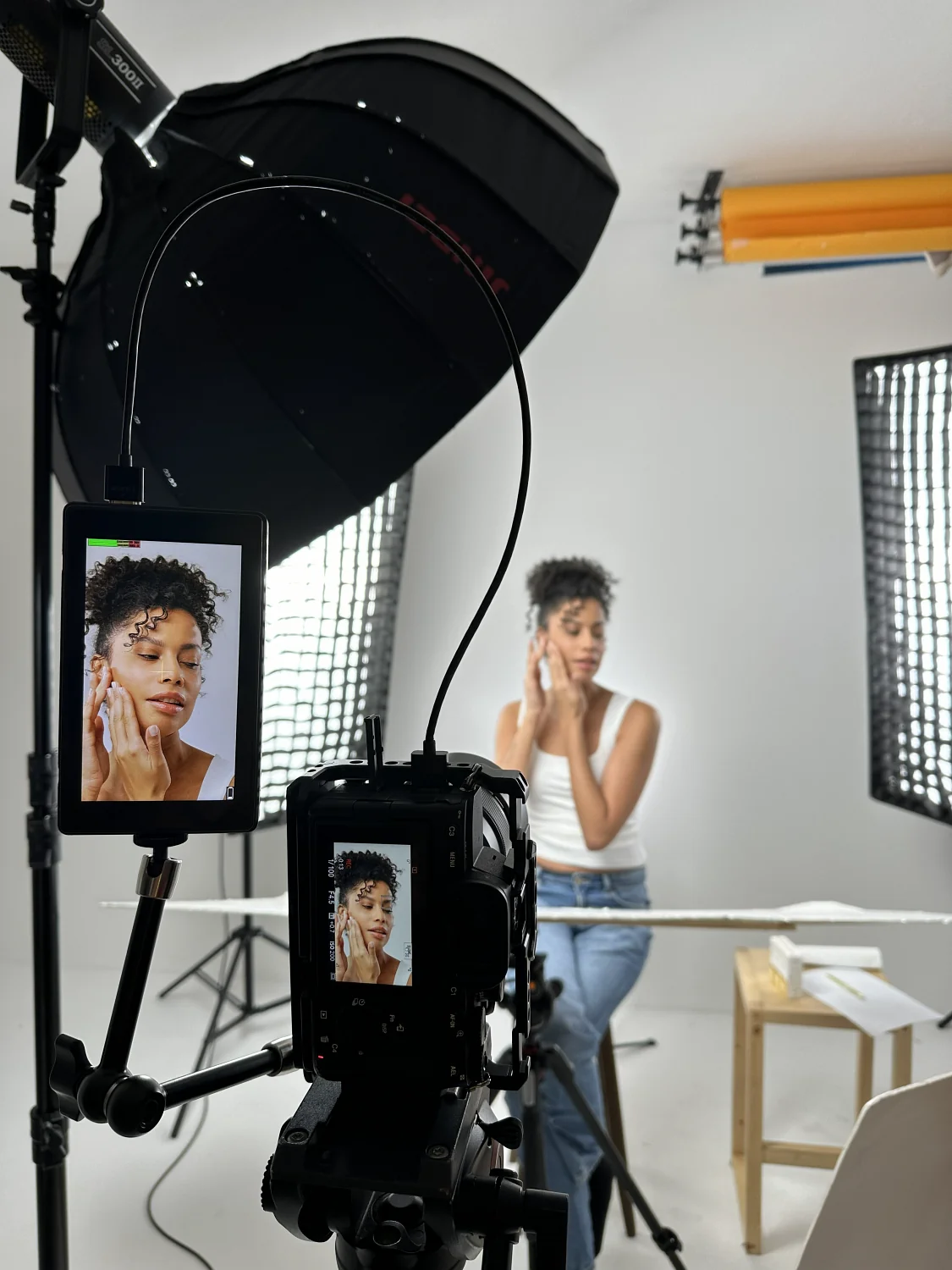
Our Portfolio of Cosmetics and Personal Care Photo Shoots
Selected brand logos from projects in the fields of cosmetics, dermocosmetics, perfume, hair care, and personal care.














Selected brands from our other customers
A selection of our photography and video production projects from various industries.



































Selected Google reviews from our cosmetics and product projects
From the 386 reviews posted on Google for LUX Production, we selected the six customer experiences that best reflect the process of shooting cosmetics and product photos. You can view all reviews on our Google Business Profile.
“From the very first moment I met Lux Production, I truly experienced a ‘professional team spirit’🌟 Once you’ve met this team, there’s no need to look for any other options because you can be sure they’ll meet all your needs flawlessly✅ I’d like to extend my heartfelt thanks to the ’Lux Production Team,’ led by Mr. Burak, for the dazzling and exciting work they’ve created for my brand 👏🤵♂️🎩‘
“The owner, Burak, and his team are fantastic—all you have to do is place your products in front of their magical lenses.”
I was looking for a quality service for product photography. Fortunately, our path intersected with Lux Production. From the first communication to the last moment, they made me feel that they worked with interest and care. I would like to thank the whole Lux Production team, especially Ms. Ceren.
“They photographed the product images for our e-commerce company with great care, using professional, high-quality photographers. We didn’t even need to edit the photos—they were perfectly composed right from the start. We were very satisfied with this service, which was the first time we’d outsourced this work. Considering the quality of service this studio provides, their pricing is also very reasonable.”
Professional and great team. We worked with them in both location and studio shootings, and they determined our needs with their expertise and offered quick solutions and suggestions. We entrust all the processes of both decorated and white background shots of our Dreamy Rikka brand for all domestic and international marketplaces with peace of mind. You will definitely not need to look for a different alternative.
“We worked with Lux Production on our product photo shoots. They’re a fast, meticulous, and creative team. We were very pleased with the results—I definitely recommend them. Thank you! 🌿”