
Trendyol, Hepsiburada, ÇiçekSepeti, n11.com ve PttAVM e-ticaret platformlarının logoları
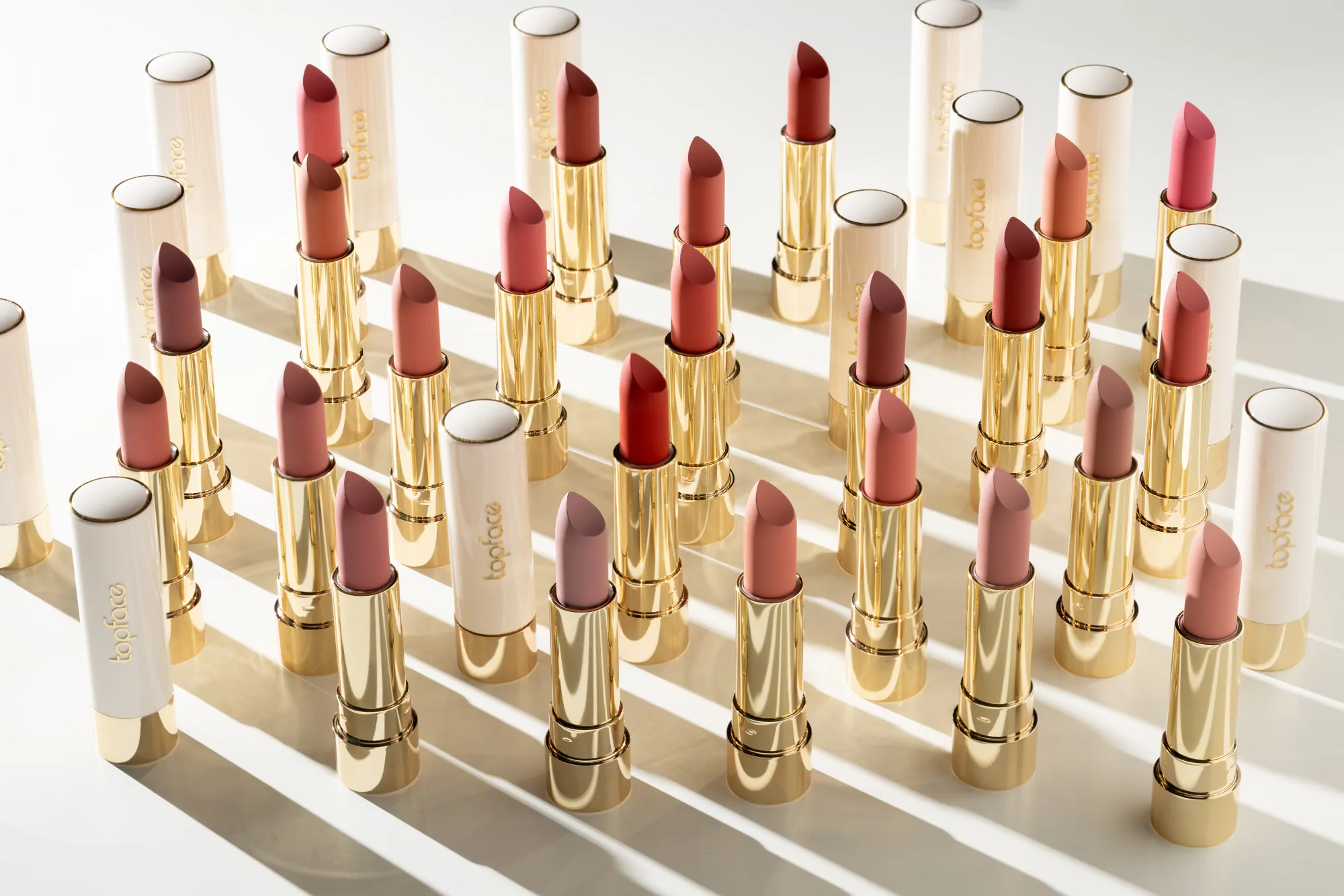
E-commerce product photo featuring lipstick products in various colors against a white background
A product photoshoot featuring multiple safe frames for different marketplacesLUX e-commerce production · actual portfolio image
E-Commerce Platform Metrics · July 2026 Update

Trendyol Image Dimensions 2026: Amazon, Hepsiburada, and E-Commerce Product Photo Dimensions

Trendyol requires a 1200 × 1800 px vertical product image with a 2:3 aspect ratio for 2026. Amazon requires a minimum of 1,000 px for zoom images and a pure white background for the main image; Hepsiburada and n11 guidelines may vary depending on the upload method. In the comparison below, you can see the aspect ratios, file types, and production targets all in one place.

Trendyol1200 × 1800 px
Multi-channel target1500 × 1500 px
Amazon ZoomAt least 1,000 px

Create vertical and square images from a single shot

If you keep the product within the square safe zone in the center and leave enough space above and below it, you can adapt the same master image to a 2:3 vertical aspect ratio for Trendyol and to a square format for Amazon, Hepsiburada, and n11.

Marketplace Visual Standards 2026. The "Production Target" values in the table represent the quality standards applied by LUX Production in its multichannel e-commerce photo shoots.
PlatformStaffing RatioMinimum / Recommended ResolutionFile TypeFile Limits
Trendyol
Verified via the official API
2:3 vertical1200 × 1800 px, 96 DPI. A maximum of 8 images per barcode.An HTTPS image URL is requested via the API.The official API documentation does not specify an MB limit.
Amazon
Panel control is required
1:1 square (Multi-channel production target)There is no specific minimum value listed in the source materials. Our production standard is 1500 × 1500 px.JPG, JPEG, or PNG. The current format must be confirmed via the seller dashboard.The current official file size limit for open files could not be confirmed.
Amazon
Confirmed by the official guide
It is flexible. A square aspect ratio is the safest format.A minimum of 1,000 px is required for Zoom. The LUX production standard is 1,600 px or higher.JPEG is preferred. TIFF, PNG, and static GIF files are accepted.There is no specific MB limit in the Amazon product image guidelines.
n11
It depends on the loading method
There is no fixed aspect ratio; the square format, which is the e-commerce standard, is recommended.There is no specific minimum pixel requirement. Our production standard is 1000 × 1000 px or higher.For Excel uploads, JPEG files are accepted; for REST API integration, image URLs are accepted.The Panel FAQ limit is 2 MB. The REST API upload limit is 10 MB.
  • With Burak Bulut Yıldırım's commercial production experience spanning from 2005 to the present,
  • Current Technical Inspection Date: July 16, 2026
  • The marketplace panels and official API documentation were used as references

Content Verification and Update Note

Trendyol image dimensions have been verified according to the official Product Create v2 infrastructure. Amazon’s pixel density, JPEG format restrictions, white background requirement, and frame fill ratios have been double-checked via the brand’s Product Image Guide page. Differences between the n11 platform’s in-dashboard and REST API file upload limits have been incorporated into the text. Since Hepsiburada does not provide a public resource containing definitive rules outside of its seller dashboard, data from older documents has been removed from the section on current requirements.

Beyond Pixel Dimensions: Quality in E-Commerce Photography

Just because a file is 1200x1800 pixels doesn’t mean the image is high-quality. The product’s position within the frame, the distribution of light on the surface, proper white balance, and the optical performance of the lens used directly determine the customer’s perception.

Resolution and Optical Sharpness

Using a high-megapixel camera alone is not enough. For a flawless zoom experience, the lens’s sharpness and a clean product texture captured at a low ISO are essential. Enlarging a low-resolution photo in Photoshop will not restore details in fabric or metal.

Framing and Aspect Ratios

Trendyol’s 2:3 aspect ratio requirement is intended to maximize screen real estate on mobile devices. For brands that sell across multiple channels, leaving sufficient space (headroom/safe area) around the product during the photo shoot ensures that you can easily crop the image to a square (1:1) aspect ratio for Amazon.

Color Accuracy (sRGB)

To ensure that the product color does not vary across different monitors, photos must be exported in the sRGB color space. The white background required for Amazon main images should not look artificial and must technically achieve a pure white (RGB 255,255,255) background value.

On the web, we talk about pixel width, not DPI. The 72 DPI or 300 DPI settings relate to printing technologies. Scanners look at the file’s width and height in pixels. Photos must be compressed at the correct ratio before being uploaded to your e-commerce site. Poor-quality JPEG compression causes unwanted pixelation (blocking) in textile textures and on metal surfaces.

Trendyol Product Photo Dimensions

Last Verified: July 2026

To maintain consistency in the catalog architecture, the Trendyol platform strictly 1200 × 1800 pixels resolution and 96 DPI in this format. This dimension corresponds to a 2:3 aspect ratio, which is particularly well-suited for the vertical scrolling experience on mobile devices. During upload, up to eight images can be added for a single product barcode (SKU).


  • In the main image, compose a clean product frame that doesn’t cut off the edges of the product and is immediately recognizable on a mobile screen.
  • Save the close-up shots that show the fabric texture, intended use, lifestyle scenes, and product dimensions as secondary photos.
  • In high-variation production processes, ensuring that the naming order of the shot list exactly matches that of the final export files prevents operational errors.

Official Document: Trendyol Product Create v2 API and Trendyol Academy Product Image Upload Guide.

Platform Update Note: Warnings such as "maximum 5 MB, light gray background," which were commonly seen on seller dashboards in previous years, are not included as strict rules in the new-generation API structure. However, since there may be specific restrictions unique to your category, be sure to take the quality warnings on the product upload screen into account.

Hepsiburada Image Dimensions

Last Verified: July 2026

Instead of providing sellers with a clear, publicly available pixel grid, Hepsiburada manages its specific image guidelines directly through the “My Partner” dashboard. As a result, the platform’s quality standards may vary depending on the product category you wish to list.

  • In professional e-commerce photography, a master file in a 1500 × 1500-pixel square format allows you to seamlessly adapt the photo to both web and mobile interfaces.
  • Make sure the images are taken against a pure white or light background without distorting the product's own color (sRGB).
  • Always verify the final set of rules via the Hepsiburada Catalog and Image Gallery panel before publishing.

Vendor Checkpoint: Hepsiburada Partner Dashboard.

Previous Data Disclosure: The "minimum 1200x1200px rule," which is frequently encountered online, is not directly confirmed on the platform's public pages as of 2026. When referring to such limits, please consult your current seller dashboard.

Amazon Product Photo Dimensions and White Background Requirement

Last Verified: July 2026

Amazon’s e-commerce algorithms are extremely sensitive to image quality. According to the guidelines, the longest side of an image must be at least 500 pixels, but this number must exceed 1,000 pixels for the zoom feature to work properly for customers. At LUX Production, our delivery standard for Amazon projects is 1,600 pixels or higher.

  • Amazon’s Main Image policy is non-negotiable: The background must be pure white (RGB 255,255,255). Your logo, accessories not included in the packaging, watermarks, or graphic text may not be added to the main image.
  • The product must be photographed so that it fills at least of the current frame.
  • Accepted formats are JPEG (recommended), TIFF, PNG, and static GIF. A square aspect ratio is the most user-friendly solution for Amazon’s global listing architecture.

To enhance your listings with charts and additional information Amazon A+ Content Visual Strategy and for the steps in the seller dashboard Our guide to adding product images to Amazon You can read it.

Official Source: Amazon Product Image Guide.

Naming Note: For bulk product uploads, it is helpful for automation purposes if the file name matches the ASIN code (B00EXAMPLE.MAIN.jpg). Follow Seller Central guidelines based on your upload module.

n11 Product Image Dimensions

Last Verified: July 2026

The n11 store platform has different technical limitations depending on your upload strategy. While manual uploads are limited to 2 MB per photo and a total of 10 images, the URL-based file size limit for REST API integrations can be as high as 10 MB.

  • If you're importing products in bulk into the store using Excel, make sure the images are in JPEG format and named correctly using the product stock code.
  • For brands planning to launch simultaneously on multiple marketplaces, using a square resolution of 1,000 × 1,000 pixels or higher is a smart production strategy.

Official Sources: n11 Visual FAQ, n11 API Integration and n11 Excel Upload Guide.

Technical Background Note: The 600x600-pixel minimum resolution specified in previous years is no longer sufficient in the era of high-resolution mobile screens. For a high-quality brand image, view these limits not as minimum requirements, but as a low-quality threshold to be avoided.

How Do We Monitor Our Data?

In our e-commerce product photography operations, we rely not on hearsay from blog posts, but directly on the platforms’ official APIs and seller documentation. Before beginning catalog shoots involving thousands of SKUs, it is essential to verify category-specific rules.

  • TrendyolThe data was retrieved from the current API structure on the platform's developer portal.
  • AmazonSince category-specific redirects are hidden within the seller dashboard, closed-system alerts are considered the official reference.
  • AmazonThe fill rate, pure white background, and format information have been verified directly from the Amazon Global guide.
  • n11The technical distinction between the panel interface and API limits is clarified in the official developer documentation.

Create Professional E-Commerce Photo Shoots

The requested pixel dimensions refer solely to the delivery format of the project. The lighting strategy, the product’s angle of presentation, the use of models, styling, and the professional retouching process are all determined on the studio set. We define your brand’s visual identity using the mood board we prepare prior to production; the approved concept is fully reflected in the shoot list.

For high-volume catalog shoots, we set up multiple sets simultaneously in our studio to speed up the process. Products that have been photographed are transferred to a digital format the next day so you can review and select the images. Once you approve the selected images, they undergo color correction, clipping, retouching, and platform-specific resizing before being delivered in their final format.

Logistics and Operations: Brands joining us from outside the city or from Europe can ship their products to our Istanbul studio. Set approvals, visual selections, and feedback are all handled seamlessly through digital channels.

Can Artificial Intelligence (AI) Images Replace Real Product Photos?

AI tools speed up the process of adding new backgrounds to existing photos or creating design concepts. However, in e-commerce, the main image is a commitment to physical reality. AI interventions that distort the texture of fabric, the sheen of metal, or the product’s true color directly increase return rates and undermine consumer trust. For appropriate use cases: AI and Real Photos in E-Commerce You can review our analysis.

Consumer Confidence RiskSectors and CategoriesRecommended Production Strategy
High RiskCosmetics, Jewelry, Luxury Fashion, BeautyAn actual photo of the product is required. It is essential that the texture and color remain accurate. AI may only be used to add a lifestyle background.
Medium RiskHome Textiles, Furniture, General ApparelThe main product reference must be recorded in a studio setting; AI support should only be used for variations in the background.
Low RiskIndustrial Parts, Hardware, Electronic AccessoriesAs long as the actual product ratios and technical connection points are preserved, large-scale virtual simulations can be created using AI.

Professional Note: In LUX Production’s approach to production, photography never makes any promises to the customer that the product itself cannot deliver. Our goal is to create visuals that are as eye-catching as they are informative.

Transformation-Focused Production at Marketplaces

This platform and photography dimensions guide is based on the field experience of Burak Bulut Yıldırım, who has been active in the commercial photography industry since 2005. Serving as a Sony Europe Imaging Ambassador from 2018 to 2026, Burak Bulut Yıldırım represents the dynamics of professional equipment. Together with the LUX team, he produces corporate projects that seamlessly blend the principles of proper lighting with global platform guidelines.

Some of the Brands for Which We Have Developed E-Commerce Solutions
  • Yamoda
  • SKAI Products
  • Trio Textile
  • Marapon (DE)
  • ColorN Drive (DE)
  • Pammys (DE)
  • Chill Brada (NL)
  • Artchi London (UK)
  • Coco Loom
  • Land of the Legends
  • Makbul Kuruyemiş

The customer reviews below were taken directly from LUX Production’s Google Business Profile. With over 380 reviews, our studio is one of the industry’s most trusted partners in the field of product photography.

5/5

“They photographed the product images for our e-commerce company with great care and attention to detail. We didn’t even need to make any adjustments to the photos—they were perfect as is. This was the first time we’d used an outside service, and we were very satisfied with it.”

Recep SermetColorN Drive, automotive paint products

5/5

“We entrust the entire process of producing both styled and plain-background product photos for our brand—for all domestic and international marketplaces—to them with complete peace of mind. You won’t need to look for any other options.”

Cigdem GorelDreamy Rikka Home Textiles

5/5

"A professional, efficient team that delivers the same high quality on every shoot. We highly recommend them."

Uğur DüzelAhoy Towels LLC

5/5

“Both the set design and the product presentation were excellent. We’d like to thank the entire team for the professionalism and attention to detail they demonstrated throughout the process.”

Selim BaytarCapyhome Home Textiles

5/5

“We sell jewelry. We had photos taken of both our designs and our decorative pieces, and they turned out really great. Whenever there’s a problem, they do their very best, which meant a lot to me.”

Mülkiye ÇınarJewelry

Check out all of LUX Production's Google reviews

Frequently Asked Questions About E-Commerce Image Dimensions

Is there a single image size that applies to all e-commerce sites?

No. For example, while Trendyol’s platform strictly requires images in a 1200 × 1800-pixel format, Amazon’s seller dashboard allows for flexible aspect ratios and requires dimensions of at least 1000 pixels to ensure high-quality zooming. For Hepsiburada and n11, master files suitable for multiple platforms must be created in a square (1:1) format based on the platform guidelines.

Does the image size for Trendyol really need to be 1200 × 1800 pixels?

Yes. When uploading your products to Trendyol via the API, the Product Create v2 documentation specifies that the resolution must be 1200 × 1800 pixels with a 2:3 aspect ratio. To ensure that the mobile listing standard is not compromised, you must adhere to this aspect ratio.

Is it required to use a cutout (white background) in the main product image?

It varies by marketplace. According to Amazon’s rules, the main image must be pure white (RGB 255,255,255). Although local platforms like Trendyol and Hepsiburada offer category-based flexibility, having the first photo on a clear and clean background is a universal sales standard for e-commerce listings.

Is DPI or pixel size more important for web images?

The only determining factor in a screenshot is the file’s actual pixel dimensions. 72 DPI or 300 DPI are relevant only for printed publications (printing). Although the Trendyol guide specifies a technical limit of 96 DPI, what really matters are the photo’s width and height in pixels.

Why do product colors look faded or different when I upload them to the platform?

This issue is usually caused by color space mismatches. Web browsers use the sRGB profile. If your photographer delivered the image in Adobe RGB format, the colors will appear washed out when uploaded to the site. All of our delivery files are optimized with the sRGB color profile embedded, which is the e-commerce standard.

Do lifestyle and product concept photos work in e-commerce?

It definitely works, but it must be used in the correct order. While the main photo presents the product in its bare form with clear proportions, the model shots or conceptual set designs used in the secondary images reinforce the customer’s purchasing decision by showcasing the product’s fabric, pose, and scale. LUX plans all casting and art direction processes according to your product line.

Can AI-generated images replace real product photos?

In e-commerce sales, where the product’s physical form, fabric texture, and true colors must be accurately represented, authentic product photos are a fundamental element of trust. AI should be viewed solely as a secondary support tool for creating background designs or conceptual alternatives.

Can I ship my products for a photo shoot? How long does delivery take?

Yes. Our brands outside of Istanbul and in Europe ship their products to our operations center via freight. The photos taken are submitted for digital approval. The final delivery timeframe is planned based on product volume, the complexity of the concept, and retouching details. Most e-commerce packages are delivered within 3 to 10 business days.

What's the Next Step After Finalizing the Measurements?

After planning your photos with the correct image dimensions, you’ll need to ensure they fit seamlessly into the marketplace’s layout. Use our up-to-date guides below to manage Amazon image slots, design your A+ Content graphics, or outline your production processes.

PRODUCT THAT INCREASES SALES FROM OUR E-COMMERCE SHOOTS: